
Finding Garfield Heights Resident Trails
A useful residents directory search starts with the question that an actual record can answer. A property question begins with a parcel or recorded deed. A defined court matter starts with the court that held it. A past household is better tested in a dated directory or archive collection. Garfield Heights records are divided between city offices and Cuyahoga County custodians, so one name result is rarely enough. Property data may identify a recorded owner, while a historical directory can show a householder in a particular edition. Neither proves every person living there now.
Keep names, addresses, and dates in their original context. A mailing address can differ from the physical property address. A court listing can lag a filing. A directory is a publisher's compilation for its edition year. The strongest approach is to pair two stable details, such as a parcel number and legal description or a case number and party role, then ask the originating office for a copy when the result matters.
- Start with MyPlace when an address, parcel, or recorded owner is known.
- Open the parcel result and retain its parcel number, city field, transfer lead, and stated property address.
- Use that parcel or the recorded party name in the county instrument index, then read the document image rather than relying on OCR alone.
- For an older address, consult a date-labeled directory, archive map, tax record, or appraisal card.
- When a public portal stops, request the existing record from the city, county, court, library, or archive that keeps it.
Note: A dated official record is evidence of the relationship it records, not a complete roster of a household.
Garfield Heights Resident Records Offices
Garfield Heights municipal offices handle city permits, departmental files, police-report copies, and Municipal Court matters. Cuyahoga County holds the land, recorded-document, probate, many court, voter, and archival layers that make a residents directory useful. The offices below are the practical starting points. For a street-by-street property sequence, use the Garfield Heights By Street directory after identifying the correct address or parcel.
Cuyahoga Fiscal Office
2079 E. Ninth Street, 4th Floor
Cleveland, OH 44115
216-443-7420
Fiscal Office Property Search
County property and tax compilation
Garfield Heights parcel route
216-443-4663, option 3
Cuyahoga Board of Elections
1803 Superior Avenue
Cleveland, OH 44114
216-443-3298
Garfield Heights Law Department
City public-records request route
Describe the existing record clearly
PublicRecordsRequest@garfieldhts.org
Garfield Heights Property Search Fields
MyPlace is the county's free property and tax compilation. Select Garfield Heights in its City control, then choose Owner, Parcel, or Address. A matching parcel opens tabs for general information, transfers, values, land, building data, permits, tax-by-year information, and a document list. Its map is helpful for orienting a parcel, but the county says the geographic and analytical data are provided as is and are not the official public record. Treat the result as a lead to the Fiscal Office record.
The MyPlace property-search screen shown here is the most efficient start when the question is tied to a known Garfield Heights address. Follow the Parcel ID into the details instead of assuming a map label is the final match.
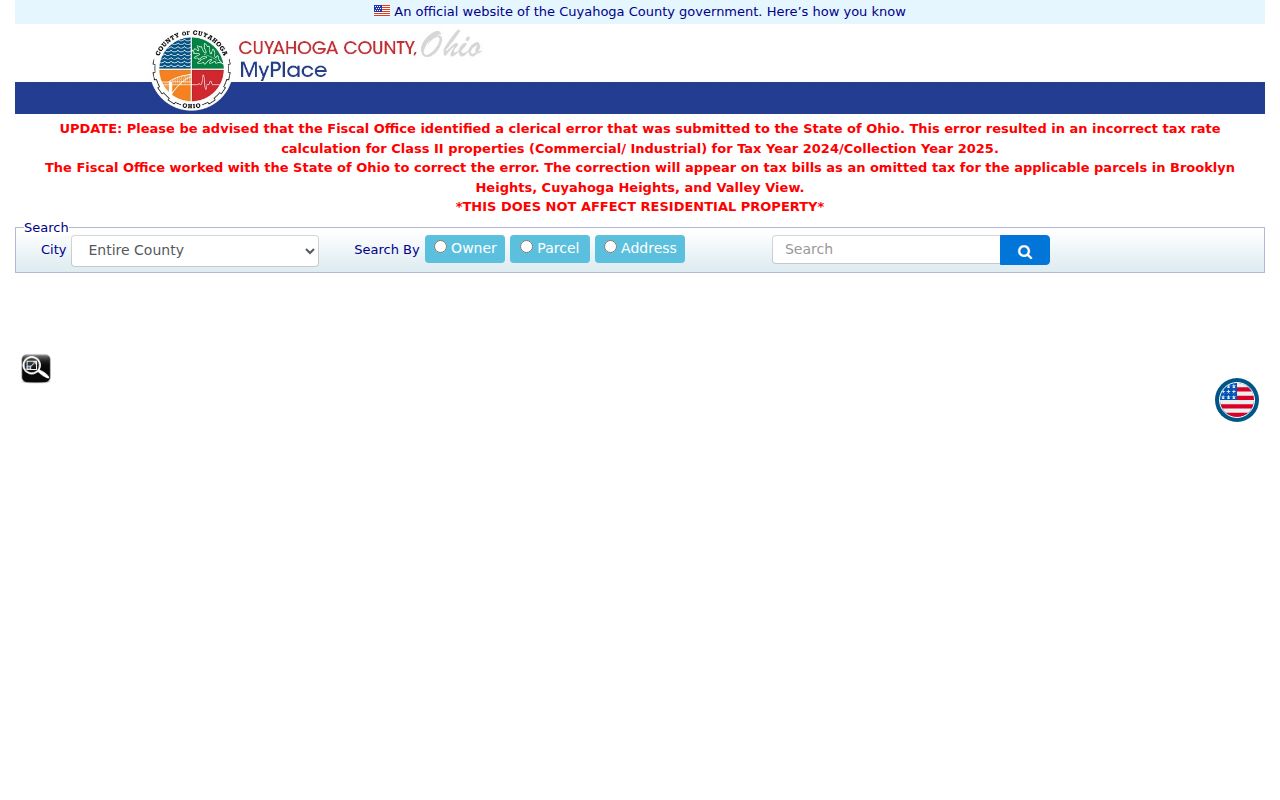
From the parcel card, transfer history and the document-list control create the bridge to the county's original recorded instruments.
| MyPlace field or control | Use in a Garfield Heights search |
|---|---|
| City | Select Garfield Heights to narrow the municipality. |
| Search By | Choose Owner, Parcel, or Address before entering a search. |
| Parcel ID | Open the detailed parcel record and retain the number exactly. |
| Transfers and Document List | Move from the parcel lead to the recorded-document path. |
| Tax By Year | Review current or prior tax information where the live parcel makes it available. |
Garfield Heights Deed Index Leads
The county's Official Records Search is the recorded-document index for property instruments. Cuyahoga County says filed documents, including deeds, are searchable from 1810 to the present. Its public screen accepts a party name, subdivision, document type, document number, or parcel ID, with optional recorded-date controls. A parcel search should retain the required dashes, such as 999-99-999. The index can search indexed fields alone or use OCR full text, but an OCR hit still needs comparison with the actual instrument image.
The Official Records Search screenshot shows the public starting screen for that narrower verification step.
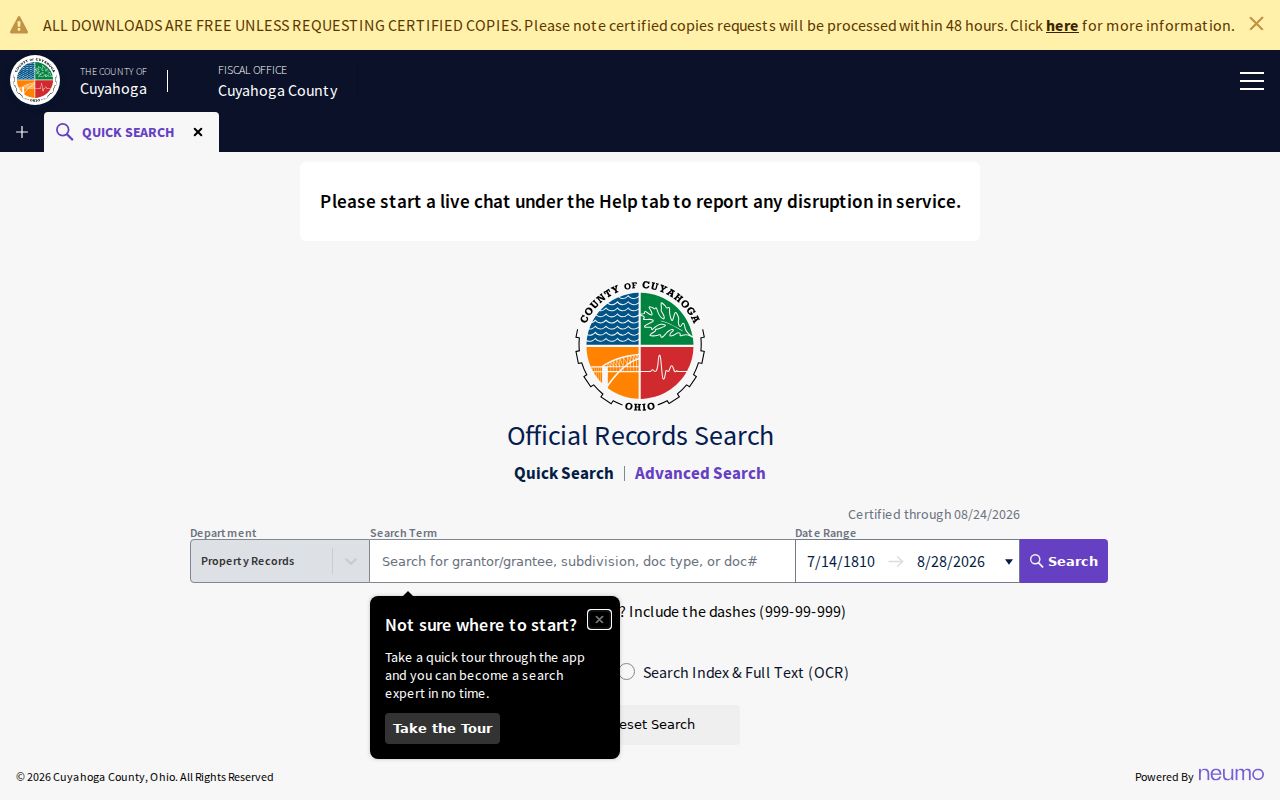
A deed names recorded parties in a land transaction. It does not establish that a party now occupies the property or identify everyone associated with an address.
- Parcel
- A county identifier for a tract or property record.
- Grantor
- The party conveying an interest in a recorded instrument.
- Grantee
- The party receiving the recorded interest.
- Index
- A search aid that points to a record; the original image is the item to compare.
Note: Use the legal description and recorded date to separate same-name parties from unrelated transactions.
Current Garfield Heights Resident Directories
There is no single current list of every Garfield Heights resident. The available sources each report a limited relationship: ownership, recorded property party, personal voter-registration confirmation, a court case, or a credential. A residents directory search works best when it selects the source that fits the question instead of treating separate records as one profile. The table separates the most useful current channels from the claim each can actually support.
| Current source | Relationship shown | Custodian | Access boundary |
|---|---|---|---|
| MyPlace parcel card | Recorded owner and parcel relationship | Fiscal Office | Free compilation, then verify the original record. |
| Official Records Search | Parties to deeds and other instruments | Fiscal Office | Public index and image route; certification is a custodian matter. |
| Ohio voter lookup | Personal registration and precinct information | Secretary of State / Board | Required fields and statutory exclusions apply. |
| CaseLook and county dockets | Party in a defined court case | Relevant court or clerk | Read the court scope, delay notice, and confidentiality limits. |
| City records request | An existing municipal record | Garfield Heights department | Describe the document, date, address, or file precisely. |
Commercial people-search services are a different category from the records above. They can combine data from several sources, but a compiled entry may be stale, uncorrected, or wrongly merged. Use the custodian record when a specific fact needs verification.
| Official record route | Commercial compiled category |
|---|---|
| Names its government or repository custodian and the scope of a particular record. | May combine data from multiple sources under the provider's own terms and methods. |
| Lets a reader inspect the record date, field labels, and stated limits. | Can omit the source date, retain an old entry, or merge people with similar names. |
| Offers a defined correction or copy route through the originating office. | Cannot correct the underlying parcel, court, voter, or vital record held by a custodian. |
For a historical household instead of a current record, the dated collections below are usually more direct than a modern web search.
Garfield Heights Voter Record Limits
Ohio's personal voter lookup requires first name, last name, and county. Choose Cuyahoga for a Garfield Heights registration. The state may then ask for a street-name selection to narrow a result. Cuyahoga's own voter-information search uses last name and date of birth. These are person-specific confirmation tools, not open browse-by-street directories. The Board also has a Garfield Heights city/district download route and a public-record procedure for official voter products when a defined civic-geography request is appropriate.
R.C. 3503.13 makes voter-registration forms and the statewide database public subject to exclusions. Social Security numbers, driver or state-ID numbers, phone numbers, email, confidential registrations, protected-worker addresses, proof of citizenship, and other legally barred data are not an invitation to search elsewhere. The Board directs people with protected registration issues to its staff rather than a public screen.
Note: Voting-history fields report participation when shown, not a voter's ballot choices.
Garfield Heights Owners Are Not Residents
Myth: a property record does not turn an owner name into a current-resident finding. MyPlace can show an owner, parcel, property address, and in a live record possibly a mailing field. A mailing address is used for correspondence or tax delivery and can be different from the property, while a situs address is the physical parcel location. A recorded deed establishes a property transaction. It does not identify every person who lives at that property or resolve a later move.
Label an address result by its source and date. A clean property trail can be useful for estate, family-history, civic, or property questions, but it should not be stretched into a statement about household membership. That distinction also avoids false matches where the same house number appears on different corridors or the mailing city follows a postal convention.
Use public records only for lawful personal, property, family-history, civic, credential, or record-access purposes. Do not use them to stalk, harass, expose, or harm anyone.
Garfield Heights ZIP Geography
Three postal ZIPs are documented on Garfield Heights addresses or municipal parcels: 44105, 44125, and 44128. Civic locations and the Garfield Heights postal facility use 44125, while the city's Land Bank list includes parcels with 44105 and 44128. That is evidence of local use, not a citywide delivery map. A ZIP is a postal delivery system, while a ward, precinct, municipal line, and tax parcel are separate geographic systems.
Verify an exact delivery address with USPS, then confirm jurisdiction in MyPlace using the city and address controls. The Recorder is stronger for parcel and legal-description work than a ZIP string. This is why the ZIP Directory does not promise a ZIP-wide people list: each Garfield Heights address needs its own postal and parcel check.
Garfield Heights Record Requests
When an online result is missing, the fallback is the custodian, not a guess. Garfield Heights directs requests for city records to its Law Department email or the appropriate department. State law, R.C. 149.43, is the Ohio Public Records Act. It generally provides access to qualifying government records, subject to exemptions, and calls for prompt inspection and copies within a reasonable period. It does not require an office to create a new compilation from unrelated data.
The Garfield Heights public-records route is shown in this source image.
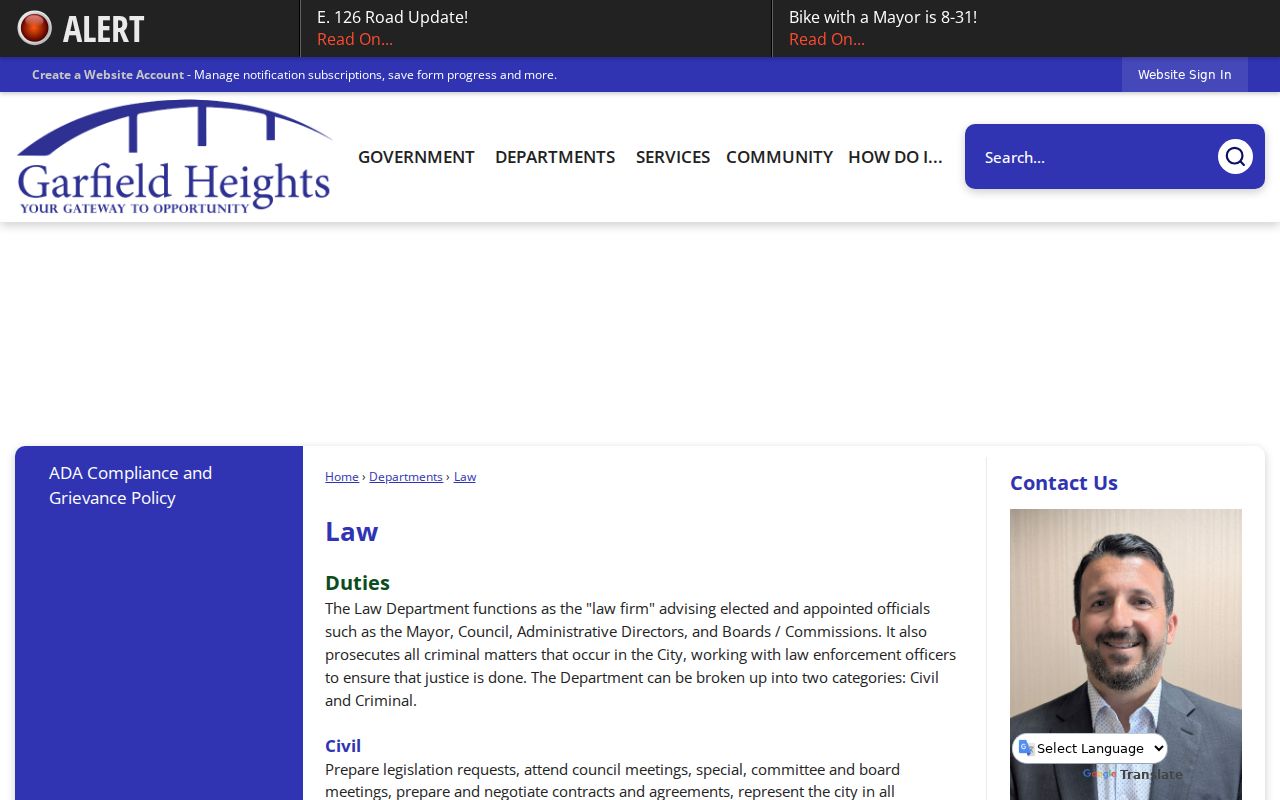
A focused request should name the existing record, a department, a date range, and an address, parcel, document, or case number when known. County land records, court copies, Archives materials, and voter products each have their own counter, request, or appointment channel.
The Ohio Attorney General's Public Records Act overview explains the statewide baseline.
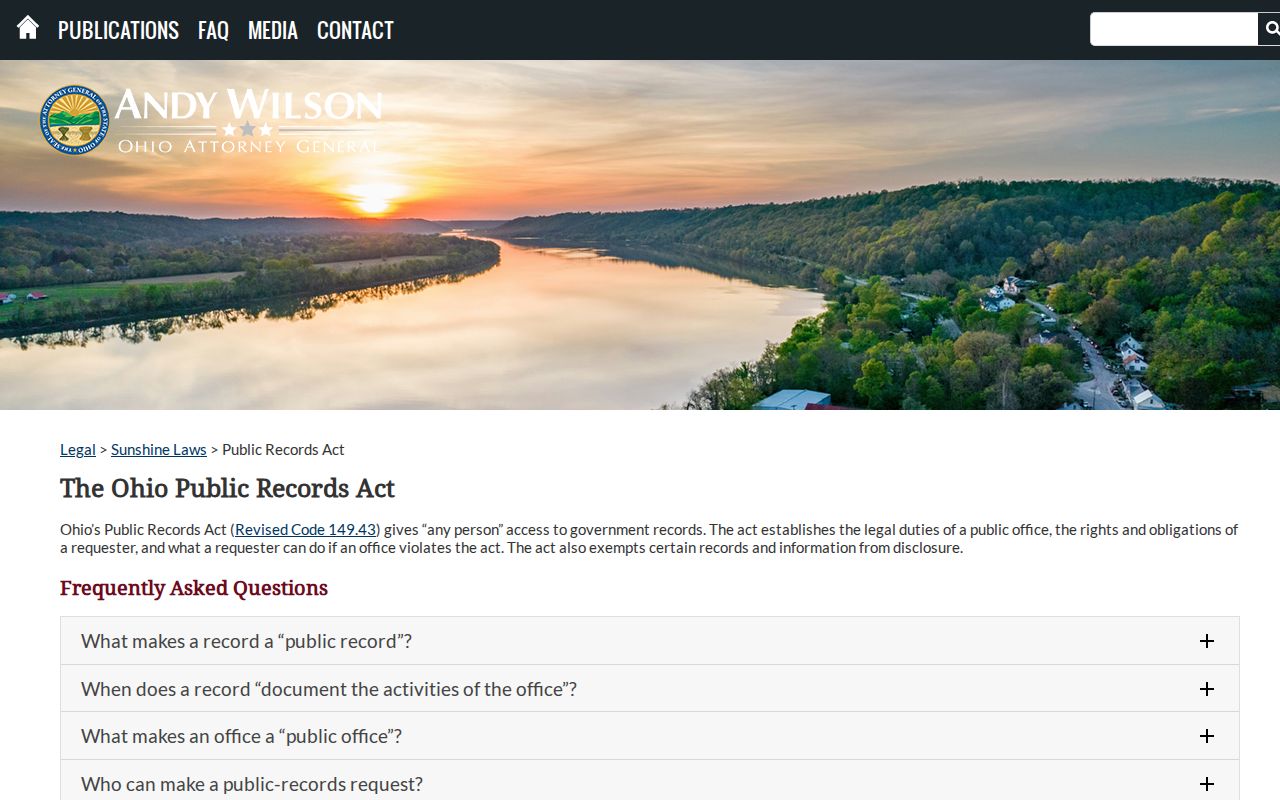
Ask for inspection, a paper copy, or electronic delivery in the medium the office keeps, and expect protected fields to be redacted rather than released.
Garfield Heights Court Leads
Garfield Heights Municipal Court serves the city and several nearby communities, so a municipal case tied to a Garfield Heights address does not necessarily indicate that every party lived in the city. CaseLook is the public starting point for municipal docket information. It warns that entries can lag filings or judicial actions by at least a day and tells users seeking verified information to send a request to the court or visit during regular hours. County Clerk and Probate records have their own case and copy paths.
The Garfield Heights CaseLook source screen is included here as a route to the municipal docket.
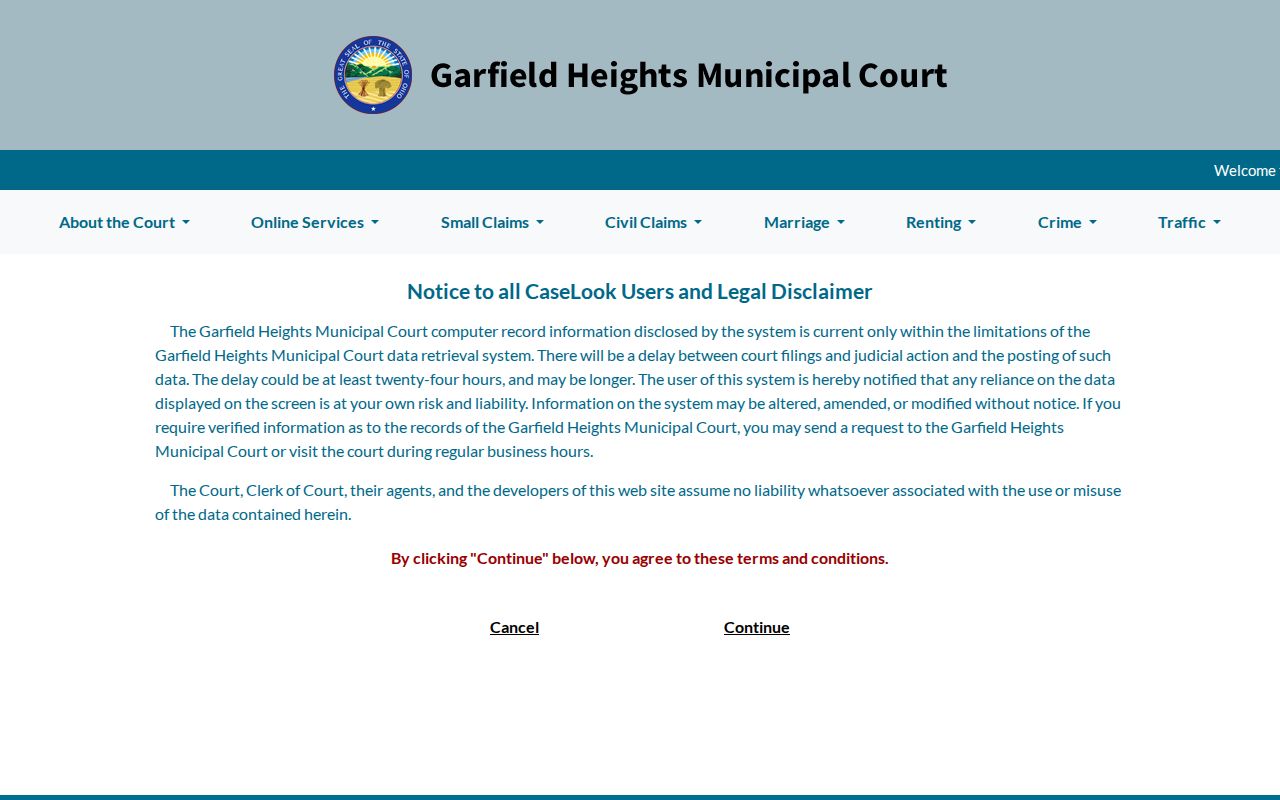
A case hit should be read by court, case number, party role, filing date, and disposition. Sealed, juvenile, adoption-related, medical, and other protected material may not be displayed or copied.
Historical Garfield Heights Resident Directories
For an earlier household, date is the key. Cleveland Public Library's digital collections include city-directory editions that explicitly cover Garfield Heights, including a 1930 title page that names the city among the covered suburbs. The County Archives also lists Cleveland City Directories from 1837 to 1972, although the run is not inclusive. CPL's Local and Global History collection adds physical and microfilm directory, telephone, and reverse or criss-cross guides.
Specific Garfield Heights directory titles are documented for 1954-55, 1956-57, and 1962, followed by selected East Suburban Directory editions from 1964 through 1979. A city-directory entry is a dated compiled lead, not current proof. The full collection route is available through the Garfield Heights City Directories page.
- Criss-cross directory
- A reverse directory arranged from an address toward a listed name or householder.
- Directory edition
- The publisher's dated volume; its year belongs with every entry taken from it.
- Householder
- The person or household designation a directory printed for that address and edition.
Note: Use an edition's own abbreviation key instead of expanding an occupation or relationship abbreviation by assumption.
Garfield Heights Before 1930
Insider tip: historic searches should use South Newburgh and Newburgh as well as Garfield Heights. The area separated from Newburgh as South Newburgh in 1907 and was renamed or established as Garfield Heights in 1930. A search limited to the current city label can therefore miss an older county record, directory title, or property reference. Pair the historical place name with the current street, parcel, or legal description where the record supports that connection.
Cuyahoga's recorded-document collection predates the city, reaching back to 1810. The historical name is a search variation, not permission to assume that every older Newburgh entry concerns the same place. County boundary, subdivision, parcel, and document details still decide whether the lead belongs in a Garfield Heights resident trail.
Garfield Heights Archives Fallback
County Archives is the local bridge when a current parcel or online deed index stops being clear. Its property-research procedure requires an appointment and asks researchers to bring a street address or parcel number. The holdings include tax records from about 1819 to 1986, original maps from about 1860 to 1945, appraisal cards from about 1935 to 1970, and selected atlas volumes. The Archives warns that street names, property dimensions, and descriptions can change over time.
Bring the exact modern parcel number and legal description before comparing maps, taxes, and directories. This avoids treating an altered street number as a missing record. The Archives can also provide research or copy help by its published request channels, while the Recorder counter remains the route for an official contemporary recorded instrument.
Garfield Heights Protected Records
Public access in Ohio has real limits. R.C. 4501.27 restricts personal information from motor-vehicle records. Safe at Home participants may use a substitute address in government records, and qualifying public-service workers can have residential information protected under state law. Court files can contain sealed or confidential material. Vital-record access also depends on record type and the custodian's process, including the signed-application rule in R.C. 3705.23 for certified copies unless another law restricts the record.
The Ohio Attorney General's identity-theft resources appear in this source image for people seeking official consumer-protection and redaction help.
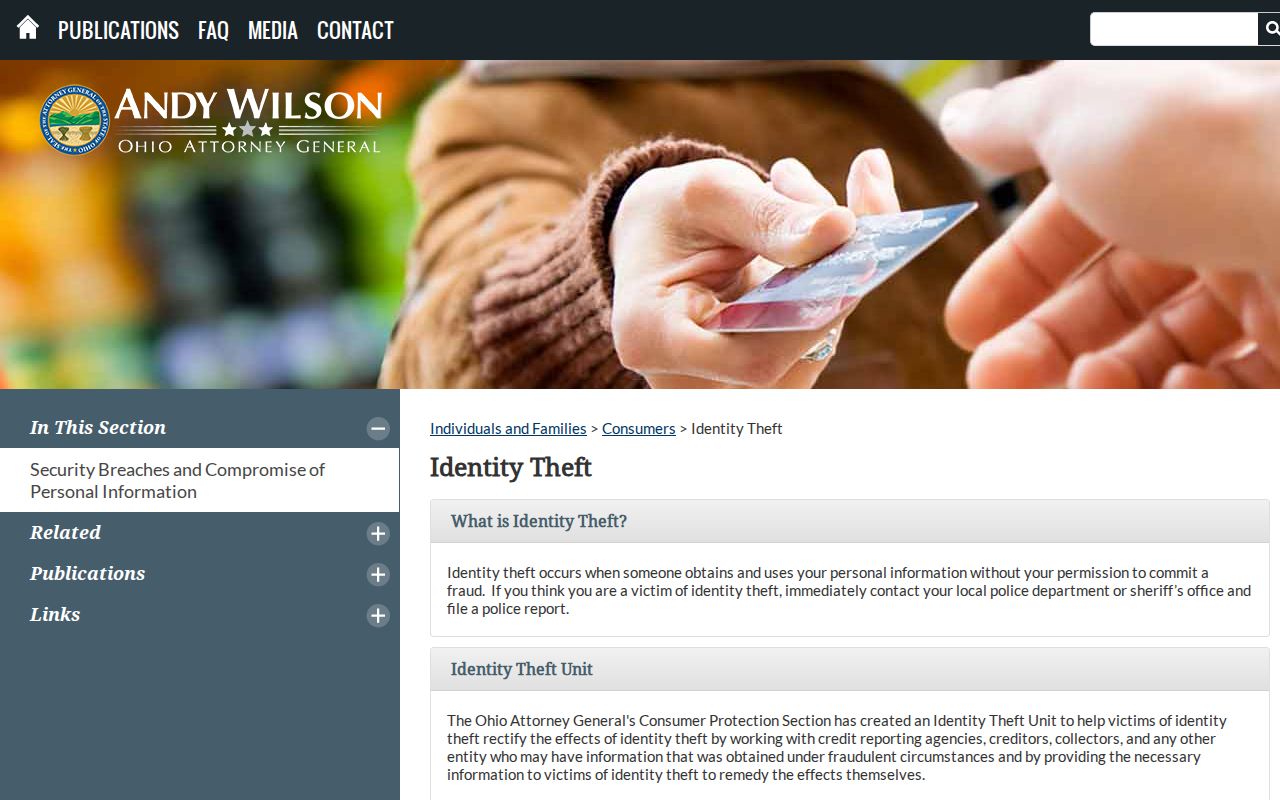
Correct a parcel, voter, court, credential, or vital-record error with the office that created or maintains it. A search result or private mirror cannot alter the underlying government record. Do not try to reconstruct a protected address from separate sources.
Garfield Heights Record Safety
False certainty causes real harm. A property owner may not occupy the property. An old address may be stale. A court record belongs to one court and can change. Keep a record's custodian, date, scope, and limitation with the result. If a document is unclear, obtain a copy or ask the custodian about the record-number procedure rather than making an identity conclusion from a name alone.
Ohio's official sources also warn against using public records to expose protected people, survivors, children, victims, or people in crisis. For an immediate safety concern, call 911. A residents directory or online portal is not an emergency service, a welfare-check system, or a reason to contact someone.