
Finding Garfield Heights Resident Trails
A good residents directory search begins with a question one record can actually answer. Property questions start with a parcel or deed. Court matters start with the court that heard them. Old households belong in a dated city directory or archive collection. Garfield Heights records sit split between city offices and Cuyahoga County custodians. A single name result is rarely the whole story. A property roll may name a recorded owner. A historical directory may show a householder for its edition year. Neither proves who lives at the address today.
- Start with MyPlace when an address, parcel, or recorded owner is known.
- Open the parcel result and retain its parcel number, city field, transfer lead, and stated property address.
- Use that parcel or the recorded party name in the county instrument index, then read the document image rather than relying on OCR alone.
- For an older address, consult a date-labeled directory, archive map, tax record, or appraisal card.
- When a public portal stops, request the existing record from the city, county, court, library, or archive that keeps it.
Note: A dated official record proves the relationship it records at that moment, not a complete roster of everyone in the household. Corroborate with a second record before drawing conclusions.
Garfield Heights Resident Records Offices
Garfield Heights keeps its city-level records close to home. Municipal offices handle permits, departmental files, police-report copies, and Municipal Court business. The heavier layers sit with Cuyahoga County. Land records, recorded documents, probate files, much of the court system, voter rolls, and archives all live at the county level, which is what makes a residents directory genuinely useful here. Start with the offices listed below. Once an address or parcel number is firm, the Garfield Heights By Street directory gives the street-by-street property sequence.
Cuyahoga Fiscal Office
2079 E. Ninth Street, 4th Floor
Cleveland, OH 44115
216-443-7420
Fiscal Office Property Search
County property and tax compilation
Garfield Heights parcel route
216-443-4663, option 3
Cuyahoga Board of Elections
1803 Superior Avenue
Cleveland, OH 44114
216-443-3298
Garfield Heights Law Department
City public-records request route
Describe the existing record clearly
PublicRecordsRequest@garfieldhts.org
Garfield Heights Property Search Fields
MyPlace is the county's free property and tax compilation, and it rewards a careful query. Pick Garfield Heights in the City control. Then choose Owner, Parcel, or Address. A matching parcel opens tabs covering general information, transfers, values, land, building data, permits, tax-by-year figures, and a document list. The map helps orient a parcel, but the county states plainly that its geographic and analytical data are provided as is and are not the official public record. Treat any result as a lead. The Fiscal Office record is the authority worth confirming against. The MyPlace property-search screen is the fastest start when the question ties to a known Garfield Heights address. Follow the Parcel ID into the detail tabs. Never assume a map label is the final match.
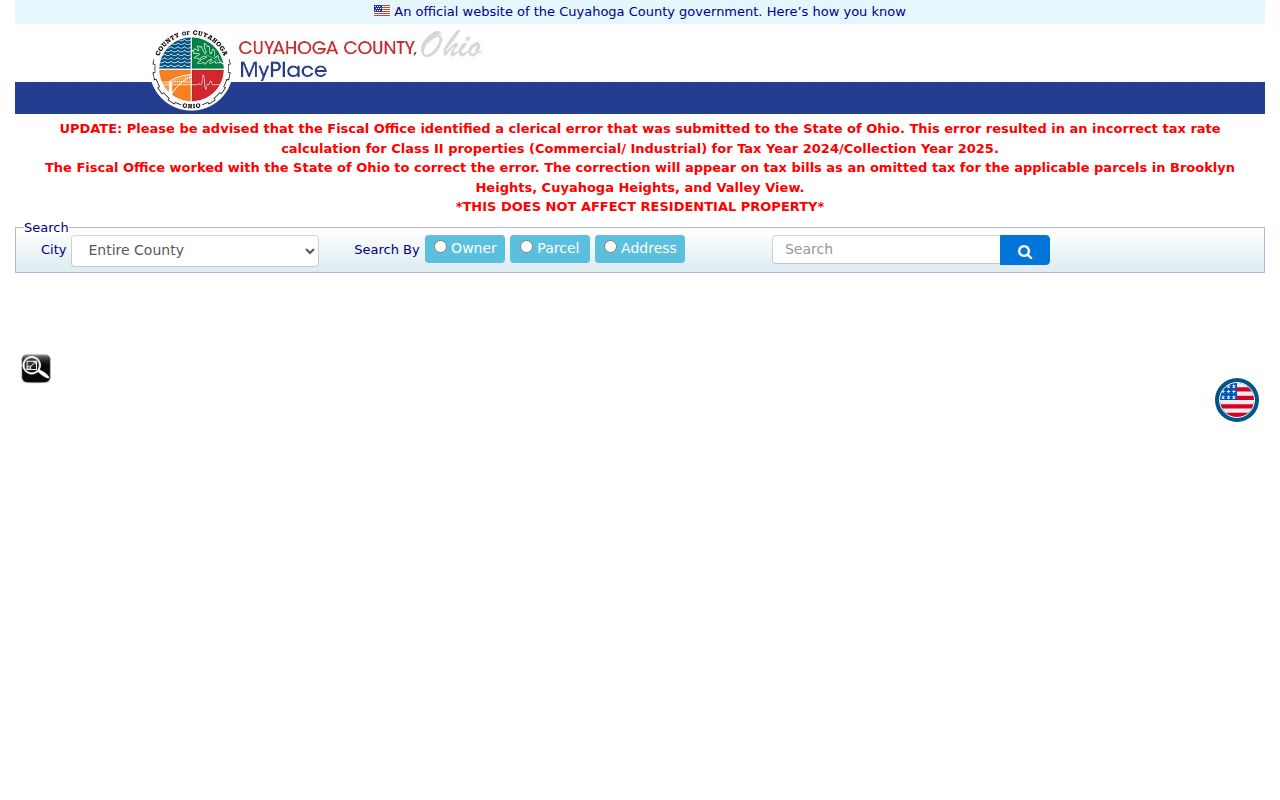
The parcel card does more than describe the property. Its transfer history and document-list control form the bridge to the county's original recorded instruments.
| MyPlace field or control | Use in a Garfield Heights search |
|---|---|
| City | Select Garfield Heights to narrow the municipality. |
| Search By | Choose Owner, Parcel, or Address before entering a search. |
| Parcel ID | Open the detailed parcel record and retain the number exactly. |
| Transfers and Document List | Move from the parcel lead to the recorded-document path. |
| Tax By Year | Review current or prior tax information where the live parcel makes it available. |
Garfield Heights Deed Index Leads
Deeds and other property instruments recorded in Cuyahoga County live in the Official Records Search. Filed documents reach back to 1810, the county says. The public screen takes a party name, subdivision, document type, document number, or parcel ID. Recorded-date controls are optional. Keep the dashes when searching by parcel, as in 999-99-999. You can query indexed fields alone or run OCR full text. An OCR hit still calls for a look at the actual instrument image.
The Official Records Search screenshot shows the public starting screen for that narrower verification step.
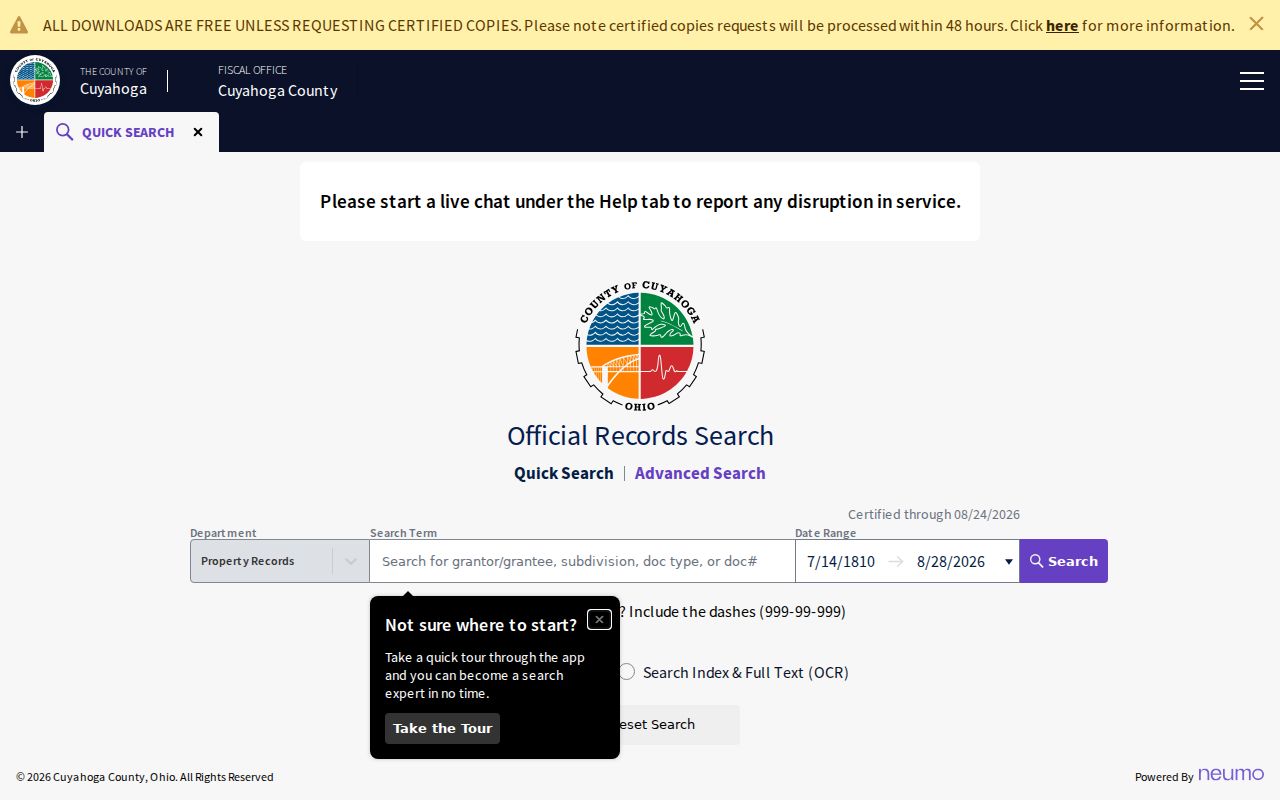
Transfer history and the document-list control on the parcel card form the bridge to the county's original recorded instruments.
- Parcel
- A county identifier for a tract or property record.
- Grantor
- The party conveying an interest in a recorded instrument.
- Grantee
- The party receiving the recorded interest.
- Index
- A search aid that points to a record; the original image is the item to compare.
Note: Match the legal description and recorded date to separate same-name parties from unrelated transactions before drawing conclusions.
Current Garfield Heights Resident Directories
No single current list covers every Garfield Heights resident. Each source reports a limited relationship. That could be ownership, a recorded property party, voter-registration confirmation, a court case, or a credential. A residents directory search works best when you pick the record that fits the question. Treating separate records as one profile only misleads. The table splits the most useful current channels from the claim each can support.
| Current source | Relationship shown | Custodian | Access boundary |
|---|---|---|---|
| MyPlace parcel card | Recorded owner and parcel relationship | Fiscal Office | Free compilation, then verify the original record. |
| Official Records Search | Parties to deeds and other instruments | Fiscal Office | Public index and image route; certification is a custodian matter. |
| Ohio voter lookup | Personal registration and precinct information | Secretary of State / Board | Required fields and statutory exclusions apply. |
| CaseLook and county dockets | Party in a defined court case | Relevant court or clerk | Read the court scope, delay notice, and confidentiality limits. |
| City records request | An existing municipal record | Garfield Heights department | Describe the document, date, address, or file precisely. |
Commercial people-search services sit in a different category from the records above. They merge data from several sources, but a compiled entry can be stale, uncorrected, or wrongly merged. When a specific fact needs verification, go to the custodian record.
| Official record route | Commercial compiled category |
|---|---|
| Names its government or repository custodian and the scope of a particular record. | May combine data from multiple sources under the provider's own terms and methods. |
| Lets a reader inspect the record date, field labels, and stated limits. | Can omit the source date, retain an old entry, or merge people with similar names. |
| Offers a defined correction or copy route through the originating office. | Cannot correct the underlying parcel, court, voter, or vital record held by a custodian. |
For a historical household rather than a current record, the dated collections below are usually more direct than a modern web search.
Older street directories often list an address, occupation, and household head in one entry.
Garfield Heights Voter Record Limits
Ohio's personal voter lookup asks for a first name, a last name, and a county. Pick Cuyahoga for a Garfield Heights registration. The state may add a street-name step to narrow results. Cuyahoga's own voter-information search works from a last name plus date of birth instead. Neither tool browses by street, so neither replaces a residents directory. For official voter products tied to a civic geography, the Board offers a Garfield Heights city/district download route. It also offers a public-record procedure.
R.C. 3503.13 opens voter-registration forms and the statewide database to the public, with exclusions. Social Security numbers, driver or state-ID numbers, phone numbers, email, confidential registrations, protected-worker addresses, and proof of citizenship stay out. Those gaps do not justify hunting elsewhere. The Board sends protected-registration questions to its staff rather than a public screen.
Note: Voting-history fields show participation only, never a voter's ballot choices.
Garfield Heights Owners Are Not Residents
Myth: an owner name on a property record is not a resident finding. MyPlace can display an owner, a parcel, and a property address. It sometimes shows a live mailing field too. A mailing address serves correspondence or tax delivery and may differ from the property. A situs address, by contrast, marks the physical parcel. A recorded deed proves a transaction happened. It does not name every occupant or settle a later move.
Label each address result with its source and date. A clean property trail helps with estate, family-history, civic, or property questions. Stretch it into a household-membership claim, though, and you invite false matches. The same house number can appear on different corridors. Mailing cities can also follow postal convention rather than municipal lines.
Use public records only for lawful personal, property, family-history, civic, credential, or record-access purposes. Do not use them to stalk, harass, expose, or harm anyone.
Garfield Heights ZIP Geography
Three postal ZIPs appear on Garfield Heights addresses or municipal parcels: 44105, 44125, and 44128. Civic locations and the Garfield Heights postal facility use 44125, while the city's Land Bank list includes parcels carrying 44105 and 44128. That proves local use, not a citywide delivery map. A ZIP is a postal delivery system. A ward, precinct, municipal line, and tax parcel each sit in a separate geographic system.
Verify an exact delivery address with USPS first. Then confirm jurisdiction in MyPlace through its city and address controls. For parcel and legal-description work, the Recorder outperforms any ZIP string. The ZIP Directory therefore promises no ZIP-wide people list. Each Garfield Heights address needs its own postal and parcel check.
Garfield Heights Record Requests
An empty online result points back to the custodian. It never points to a guess. Garfield Heights routes city-records requests to its Law Department email or the appropriate department. The governing law, R.C. 149.43, is Ohio's Public Records Act. It generally opens qualifying government records, subject to exemptions. Inspection must be prompt, and copies must come within a reasonable period. It never forces an office to build a new compilation from unrelated data. The city's official site displays the Garfield Heights public-records route on its Law Department page.
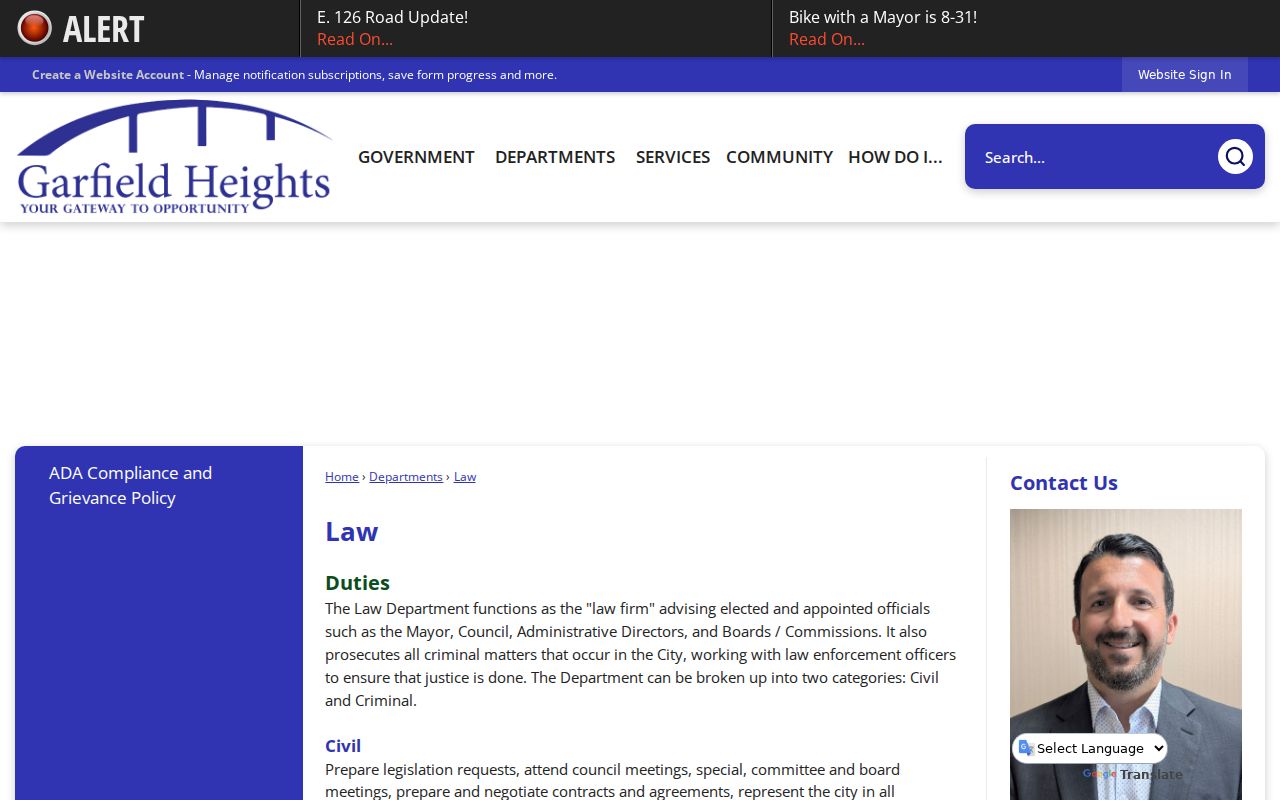
A focused request names the existing record, the department, a date range, and an address, parcel, document, or case number when known. County land records, court copies, Archives materials, and voter products each run through their own counter, request, or appointment channel. The Ohio Attorney General's Public Records Act overview sets out the statewide baseline.
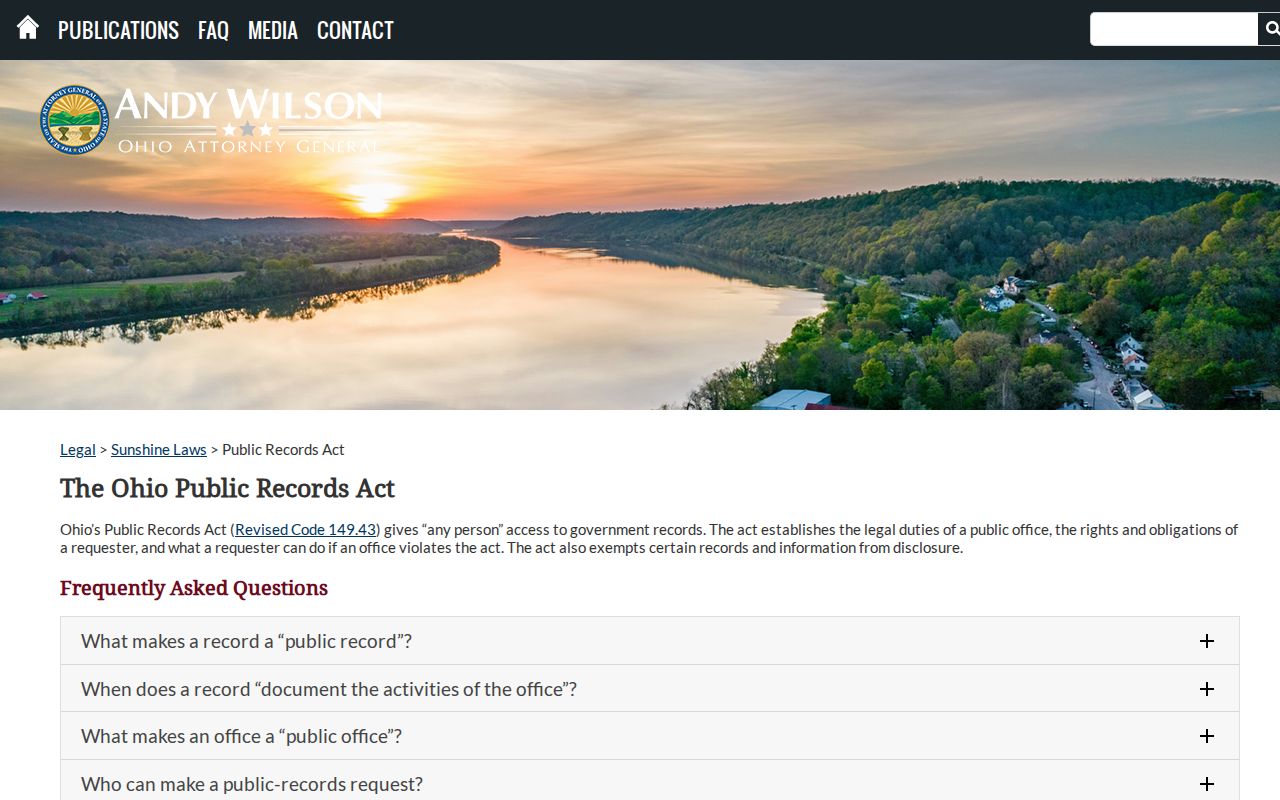
Ask for inspection, a paper copy, or electronic delivery in the medium the office keeps. Expect protected fields to be redacted rather than released.
Garfield Heights Court Leads
Garfield Heights Municipal Court serves the city and several nearby communities. A municipal case at a Garfield Heights address never proves every party lived in the city. CaseLook is the public starting point for the municipal docket. The Garfield Heights CaseLook page leads straight to it. Entries can lag filings or judicial actions by at least a day, so CaseLook itself warns users about that gap. For verified information, CaseLook directs users to send the court a request. It also suggests visiting during regular hours. County Clerk and Probate records follow their own case and copy paths.
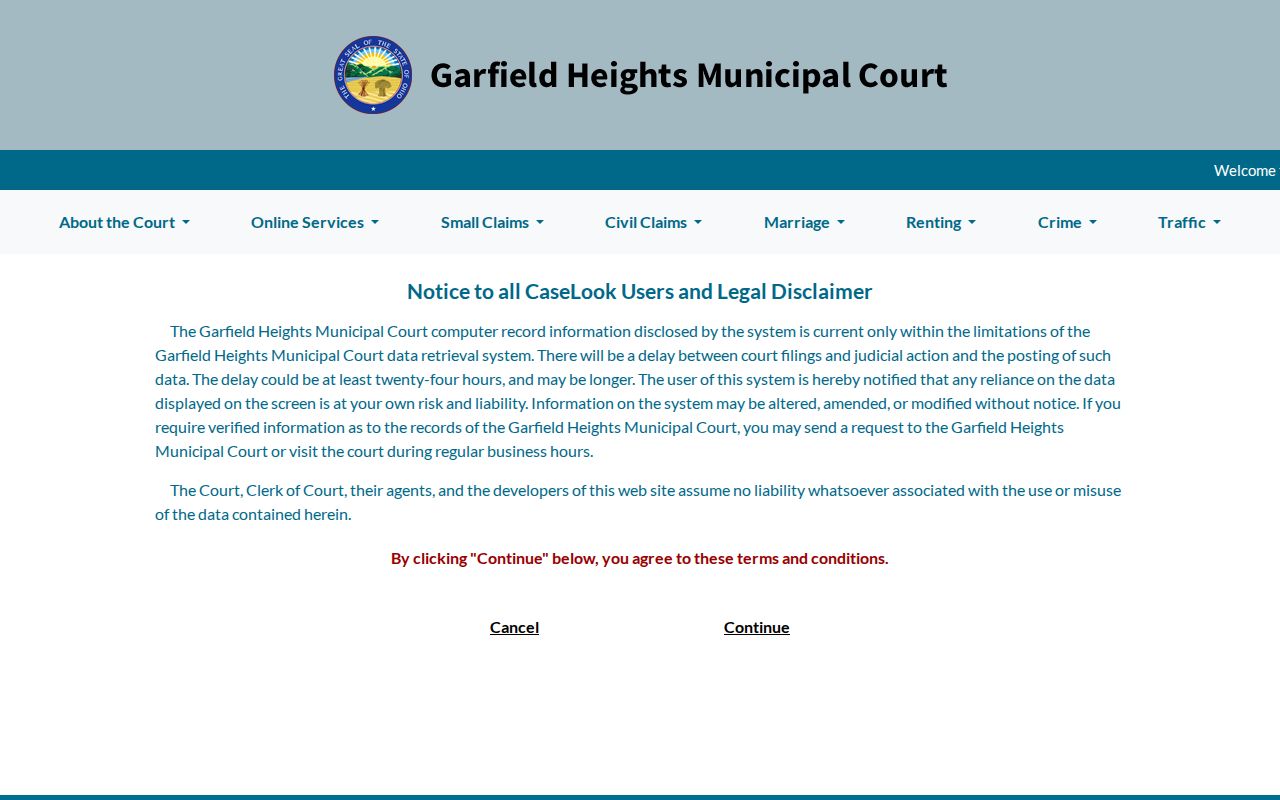
Read a case hit by court, case number, party role, filing date, and disposition. Sealed, juvenile, adoption-related, medical, and other protected material may be withheld from display or copying.
Historical Garfield Heights Resident Directories
Date drives every historical household search. Cleveland Public Library's digital collections hold city-directory editions that explicitly cover Garfield Heights. A 1930 title page names the city among covered suburbs. The County Archives lists Cleveland City Directories from 1837 to 1972, though the run is not inclusive. CPL's Local and Global History collection adds physical and microfilm directory guides. It also holds telephone and reverse or criss-cross guides. Specific Garfield Heights directory titles exist for 1954-55, 1956-57, and 1962. Selected East Suburban Directory editions follow from 1964 through 1979. A city-directory entry is a dated compiled lead, not current proof. Trace the full collection route through the Garfield Heights City Directories page.
- Criss-cross directory
- A reverse directory arranged from an address toward a listed name or householder.
- Directory edition
- The publisher's dated volume; its year belongs with every entry taken from it.
- Householder
- The person or household designation a directory printed for that address and edition.
Note: Use an edition's own abbreviation key rather than expanding an occupation or relationship abbreviation by assumption.
Garfield Heights Before 1930
Insider tip: search South Newburgh and Newburgh too. Garfield Heights began as South Newburgh in 1907. It split from Newburgh and took its present name in 1930. That history matters for anyone tracing past residents of Garfield Heights. An older county record, street directory entry, or deed may sit under the earlier name. Match the historic place name to the current street, parcel, or legal description. Do this whenever the record supports the connection.
Cuyahoga County's recorded documents reach back to 1810, well before the city existed. Treat the old name as one search variation. It is not proof that every Newburgh entry points here. Boundary lines, subdivision plats, parcel details, and document text still matter. They determine whether a lead truly belongs in a Garfield Heights resident trail.
Garfield Heights Archives Fallback
When a parcel trail or online deed index goes cold, County Archives is the local fallback. Its property-research procedure runs by appointment. Staff ask researchers to arrive with a street address or parcel number. Holdings span tax records from roughly 1819 to 1986. Original maps run from about 1860 to 1945, appraisal cards from about 1935 to 1970, and selected atlas volumes round out the shelf. Street names, lot dimensions, and property descriptions can shift over the years, the Archives cautions.
Carry the exact modern parcel number and legal description. Do this when comparing maps, tax rolls, and city directory volumes. That habit keeps an altered street number from looking like a missing record. The Archives also handles research and copy requests through its published channels. The Recorder counter, meanwhile, issues official contemporary recorded instruments.
Garfield Heights Protected Records
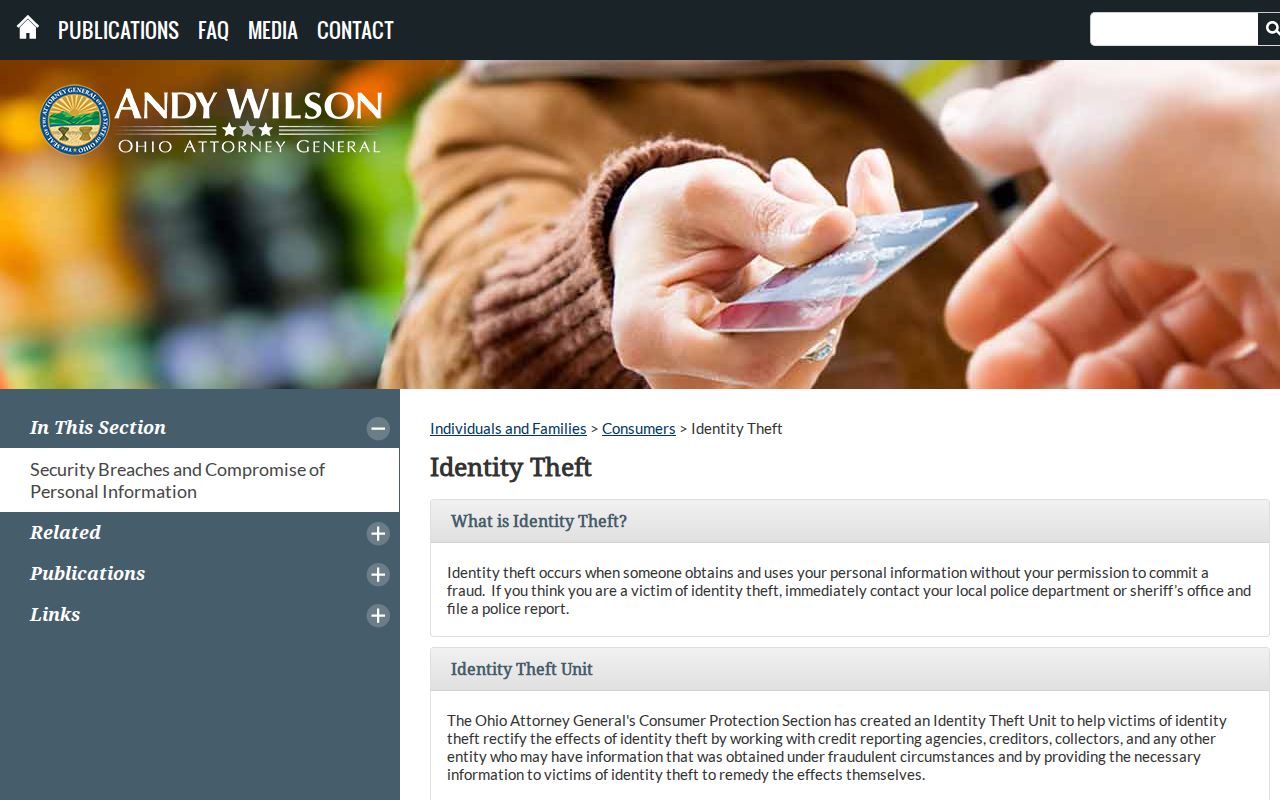
Ohio public access has firm limits. R.C. 4501.27 shields personal details in motor-vehicle records. Safe at Home participants may list a substitute address in government records, and qualifying public-service workers can have residential information protected under state law. Court files may hold sealed or confidential material. Vital-record access depends on the record type and custodian, including the signed-application requirement in R.C. 3705.23 for certified copies unless another law closes the record. The Ohio Attorney General's identity-theft resources offer official consumer-protection and redaction help.
Fix a parcel, voter, court, credential, or vital-record error at the source. Only the office that created or maintains the record can change it, and no search result or private mirror can do the same. Never rebuild a protected address by stitching separate sources together.
Garfield Heights Record Safety
False certainty does real damage. A listed owner may not live at the property. An old address may be stale. A court record belongs to one court and can change over time. Keep each result attached to its custodian, date, scope, and limitation. When a document seems ambiguous, order a copy. Or ask the custodian about the record-number procedure. Do not decide identity from a name alone.
Ohio's own officials warn against using public records to expose protected people. That includes survivors, children, victims, or anyone in crisis. Call 911 for an immediate safety concern. A residents directory is not an emergency service. It is not a welfare-check system or a license to contact someone.